
Dreams about an ex arrive uninvited — mid-recovery, or years after everything settled — and leave a residue that lasts the morning. The internet’s answer is a symbol dictionary. This page’s answer is shorter and more honest.
Dreaming about an ex is an ordinary feature of sleep after a significant relationship, not a message about it and not an instruction to act. What follows is what can be said without inventing a mechanism.
What does it mean when you dream about your ex?
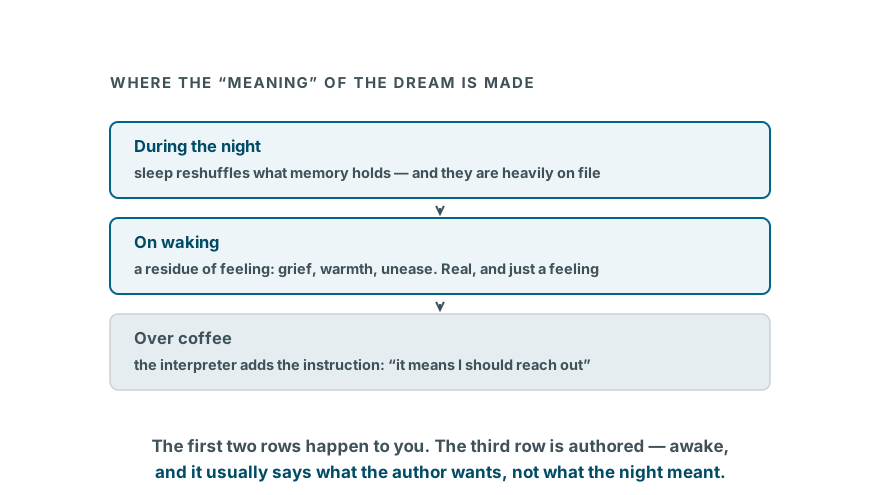
Mostly that they occupy a great deal of your memory, and that sleep works with what is loaded. Three things can be said without pretending to more:
They are ordinary. People dream about exes during recovery, after recovery, inside happy new relationships, and decades later. The dreams cluster around stress, anniversaries and life changes, and also around nothing at all.
They are made of memory, not messages. A long relationship leaves that person heavily represented in the head: years of images, voices, scenes. An ex in a dream is there the way your childhood home is — because a lot of it is on file.
The meaning is added in the morning. The dream delivers a feeling — grief, warmth, unease. The instruction people extract (“it means I should reach out”, “it means I’m not over it”, “it means they think of me”) is authored by the interpreter, awake, and usually says more about what the interpreter wants than about the night.
This page carries no symbol dictionary. A dream symbol dictionary is a list that assigns fixed meanings to dream contents — a house is this, an ex is that — and there is no method behind those lists: none of them can say how it knows what your ex “represents”. Where that certainty is sold, check what else the site sells.
Does dreaming about my ex mean they are thinking about me?
No. A dream happens inside one head and carries no information about anyone else’s. This is worth saying plainly because the opposite belief is everywhere, and it is the single most expensive piece of dream folklore: it converts an ordinary night into an apparent signal from another person, and signals invite replies.
For example, a dream in which they apologise feels, at breakfast, like evidence that they want to. It is evidence of what you would like to hear said — assembled from material you already had.
Should I text my ex because of a dream?
Decide it the way you would decide any other urge to make contact, because that is what it is. The practical problem after a vivid dream is not the dream — it is what it leaves behind.
The residue is the mood a dream leaves in the waking hours after it: a day that starts with them vivid and near, and an urge with fresh momentum. Treat it as weather. It is a feeling, not a finding; it fades on the clock that feelings fade on, faster if the day has contents.
Then treat the urge it powers exactly like every other urge to make contact: what do you want to happen after they read it? Imagine the message actually arriving — “I dreamt about you last night” — landing on their phone, at their kitchen table, possibly in front of someone else. That is the whole of what the dream would have accomplished. A dream is not a reason; it only feels like one for about an hour.
How do I stop dreaming about my ex?
You cannot order dreams around directly, and trying to is another way of paying them attention. What can be adjusted is the material going in.
If the dreams are frequent mid-recovery, they usually track the waking loop: heavy rumination before sleep loads the material. The same moves that thin the daytime thoughts apply here too, such as closing the refresh sources in the evening, keeping the grief in its slot rather than at midnight, and giving the hour before bed something dull to do. That is the closest thing to a dream lever anyone honestly has, and it is indirect: the dreams thin out with the rest of the missing, not before it.
Why am I dreaming about my ex years later?
Because “on file” is permanent, and a dream long after the ending is remembering rather than relapse. This one deserves its own answer because it rattles people most: why now, when I’m fine?
The person mattered; the memory keeps them represented; sleep occasionally deals from that deck for reasons as mundane as a smell, a song, or a stressful Tuesday. It requires nothing of you, and it is not a sign — there are no signs.
Where this page stops
Recurring nightmares about a relationship — especially one that involved fear, control or harm — are a different phenomenon from ordinary ex-dreams, and worth taking to a professional rather than a page. The same if dreams are part of a larger pattern: weeks of broken sleep, dread, a mood that will not lift. Going is not an admission of anything.
Otherwise: note it, let the residue burn off, and give the day contents. The rest of the missing fades the same way.