
“We can still be friends” is said at the end of a very large share of breakups, and meant sincerely almost every time. It also mostly does not happen — and when it does, it happens much later, and differently, than the sentence imagines.
Being friends with your ex is a relationship built after the bond has drained, not a softer setting applied to the one that just ended. That distinction is the whole page: the friendship is real and possible, and the thing that usually wears its name is not.
Is it okay to stay friends with an ex right after the breakup?
Usually not, and the reason is mechanical rather than moral. At the moment of the ending, “friends” is rarely a plan. It is an anaesthetic: a way to make the ending smaller, to keep the person in reach while losing the relationship, to leave a door visibly ajar.
Recovery runs on disuse — the habit of them fading because it stops being fed. An immediate friendship feeds it on schedule: the check-ins, the memes, the “how are you really”. It also keeps the older layer alive. The tradition that treats romantic bonds as attachment bonds, described in Hazan and Shaver’s paper on romantic love as an attachment process, is a useful frame here: renaming a bond does not dissolve it, and proximity keeps it in use. Both people stay attached; one of them usually stays hopeful; and the eventual real ending, when it comes, is a second breakup with worse timing.
So the honest order is distance first, friendship — possibly — later. The gap is not cruelty. It is the condition under which a real friendship becomes possible at all.
How do I know if my ex wants friendship or something more?
Watch the pattern rather than the label, because the label is free and the pattern is not.
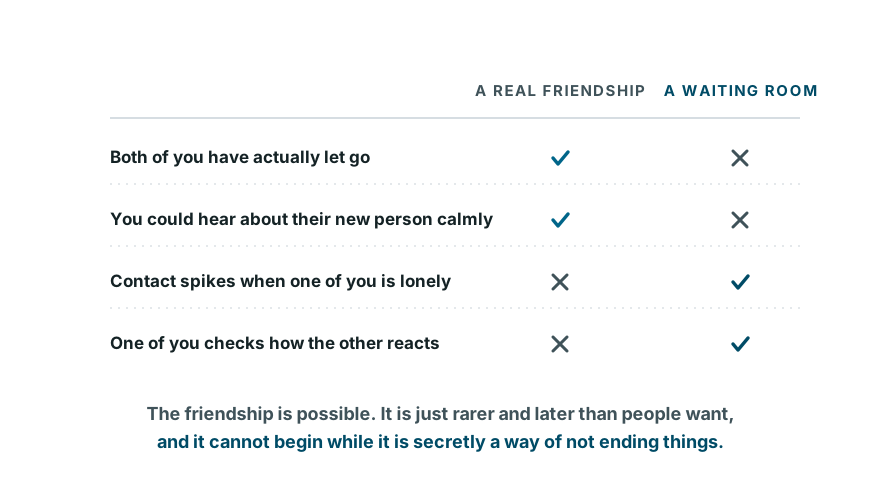
A real friendship with an ex has two properties: both people have actually let go, and the contact is steady rather than tidal. A waiting room is the opposite arrangement wearing the same word — a friendship kept in place because ending it fully would be the real ending. Its tells are consistent:
- contact spikes at night, on holidays, or when one of you is lonely;
- one person monitors how the other reacts — to their dating, their silence, their stories;
- warmth surges exactly when the other pulls away;
- the “friendship” would not survive one of you being happily with someone new.
For instance, a message that arrives most Fridays after midnight and never on a Tuesday afternoon is not a friendship schedule; it is a loneliness schedule, and it is telling you what the contact is for.
The last tell is the cleanest single check. Imagine hearing, from them, that they are seeing someone and it is serious. If the imagined feeling is a flinch, what exists is not yet friendship — it is hope on a maintenance dose.
Should I be friends with my ex if I still have feelings?
Not yet, and pretending otherwise has a predictable price: you pay the full cost of proximity — the updates, the new-person news arriving live, the availability without the relationship — while the feelings get fed just enough to stay alive. It is the most expensive possible way to not be together.
The kinder move, to yourself, is the ordinary one: distance, recovery, and an honest re-asking of the question much later. A common ending: by the time friendship becomes possible, it has also become optional — you could, and mostly do not need to.
How long after a breakup can you be friends?
There is no honest number here; the marker is a state rather than a date. Detachment means the bond has stopped organising your attention — their name in a notification does not reorganise the evening, and news of their new person lands as information instead of injury. That state is the entry condition, and people reach it on wildly different schedules.
Former partners who become real friends usually share most of the rest, too: the ending is old; both have fully detached, often both have loved other people since; the friendship has its own content, such as work they both care about, a shared sport, or children whose logistics need two civil adults — not curated nostalgia; and neither audits the other.
Notice what is absent from that list: recency. The friendship that works is almost always built on the far side of complete detachment, not negotiated at the exit.
Shared circles, briefly
A shared friend group forces contact; it does not force friendship. Civil at the table, warm enough not to make it weird for everyone else, and quiet on the direct channel — that is a complete and legitimate arrangement, and nobody reasonable expects more of the early months. The group can hold you both without you holding each other.
Where this page stops
If what keeps the “friendship” alive is fear — that saying no to it triggers anger, punishment, or escalation — that is not a friendship question, and the right support is a professional or a safety resource, not an etiquette page. And if the proximity is keeping you in weeks of sleepless, appetite-less grief, that is a health question with a person for it. Going is not an admission of anything.
Otherwise: the question usually answers itself once recovery is real. Start there.