The surprise, for a lot of people, is that heartbreak turns out to be physical. Not metaphorically — the chest genuinely aches, food genuinely will not go down, and three a.m. becomes a place you live.
Not being able to sleep after a breakup is, in the ordinary case, a stress response doing what stress responses do rather than a sign of anything broken in you. This page is about the body’s half of a breakup: what it is doing, how to keep it maintained, and the honest line where a website hands over to a doctor.
Is it normal to feel physically ill after a breakup?
Common, yes — chest tightness, nausea, exhaustion, a head that will not focus are the ordinary furniture of the acute phase.
The body does not file “breakup” under sadness. It files it under threat. A central attachment has been torn out, and the stress machinery responds the way it responds to any alarm: vigilance up, sleep light and broken, digestion deprioritised, heart doing odd things at rest. Emotional pain also runs on machinery it shares with the physical kind — “it hurts” is not a figure of speech. That a bond can behave like a physiological system rather than a sentiment is the premise of the attachment tradition in psychology; Bowlby’s Attachment is the volume that sets out how such bonds form and what separation from one does.
None of this means something is wrong with you. It means the system is doing exactly what it does under acute stress — and acute is the operative word: this phase eases for a lot of people as the first days become structured weeks. Your job during it is not to perform wellness. It is maintenance.
Normal, though, does not mean ignorable, and the last section of this page is the part that matters most if the storm is not the ordinary kind.
Why can’t I eat after a breakup?
Acute stress switches appetite off — under alarm the body deprioritises digestion, and hunger simply stops arriving on schedule.
The switch is off, and arguing with it doesn’t flip it. What works is dropping the standard and keeping the rhythm:
- Small counts. Something unarguable, such as toast, a banana, soup, yoghurt or a milky drink — liquid calories are still calories, and cold things sometimes go down when hot meals refuse.
- Schedule beats hunger. Eat by the clock, not by appetite — something at the times meals used to happen. You are keeping the machinery running, not dining.
- Easy beats virtuous. This is not the fortnight for a nutrition project. The freezer, the tin, the meal a friend drops off — all legitimate.
If a friend asks what they can do: food is the answer. It is concrete, it is deliverable, and it removes a decision from a person who has no decisions left.
Why can’t I sleep after my breakup?
Because a stress response is anti-sleep by design: it keeps the system alert, and night strips away every distraction that held the day together.
There is a second thing going on that is not chemical at all. The bed is where the relationship was most ordinary — the last conversation of the day, the shape of another person in the room — so the hour of going to bed is the hour the absence is most concrete. Rumination is the loop that fills that space: the same evening replayed with different endings, at speed, indefinitely. It is not thinking, and it produces nothing you can use in the morning.
How do I sleep after a breakup?
Lower the target from a good night to rest in the dark at a regular hour, and let sleep be a bonus rather than the objective.
Chasing “a proper night’s sleep” during the acute phase mostly manufactures a second failure to lie awake with. Lying still with your eyes closed pays real physiological rent even when sleep doesn’t come.
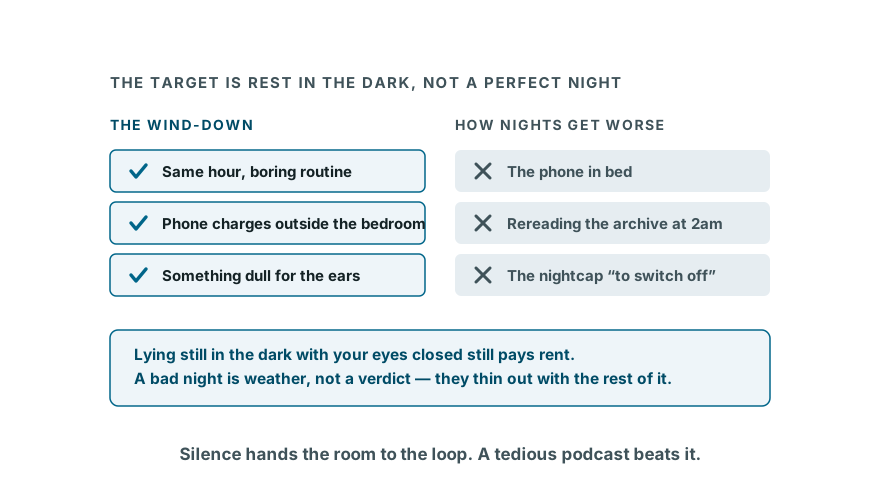
The mechanics: a wind-down boring enough to be automatic, at the same hour; the phone charging in another room — in bed it is the rumination loop with a search bar attached; something dull for the ears, because a tedious podcast beats silence, and silence hands the room to the loop. For example, an episode of something you have already heard, played low with a sleep timer, gives the mind a rail to run along without giving it anything new to chew. Bad nights will still happen. They are weather, and they thin out with the rest of it.
Should I drink to get through the first nights?
No — it is the most tempting shortcut on the table and the worst trade.
Alcohol is the classic trade and the worst one: it buys unconsciousness, not sleep — the second half of the night shatters — and it delivers its chemical low onto a nervous system already scraping bottom, usually at exactly the hour the urge to text is strongest. The same logic covers anything else that promises to switch you off: the debt lands tomorrow, with interest.
Over-exercising into exhaustion is a subtler version — training to collapse “so I’ll sleep” adds a physical stressor to a stressed system. Movement helps; punishment doesn’t. A walk is the honest dose.
Where this page stops — and means it
This page describes the ordinary storm, and the ordinary storm eases. Some of it is not ordinary, and pretending otherwise would be the kind of lie this site exists to avoid:
- Days, not nights. If real food or real sleep has barely happened for days on end — go to a doctor.
- Alarming symptoms. Dizziness, fainting, chest pain that frightens you, fast weight loss — doctor, and chest pain that feels wrong is an urgent-care question, not a search query.
- The welded-on darkness. If the sleeplessness comes attached to hopelessness that will not lift, or to thoughts of harming yourself — that is beyond any page, this one included. A doctor, a therapist, or a crisis line is the right reader, today. Going is not an admission of anything; it is using the right tool.
For everything short of those lines: small food on a schedule, rest in the dark, no chemical shortcuts, and days with some structure in them. The first week’s order of operations is here, and what the following weeks look like is here.