The first day has a misleading job description. It feels like the day you must understand what happened, say the right thing, decide who you are now. It is not.
What to do the day of a breakup is a far shorter list than the day makes it look: get through the hours without making anything worse. Sleep somewhere, eat something, tell one person, put your ex out of sight. Everything below is in service of that, and nothing below asks you to understand anything.
What should I do immediately after being broken up with?
Cover the animal basics first — somewhere to sleep, something to eat, one person who knows — then mute your ex everywhere so the evening is not spent watching their name.
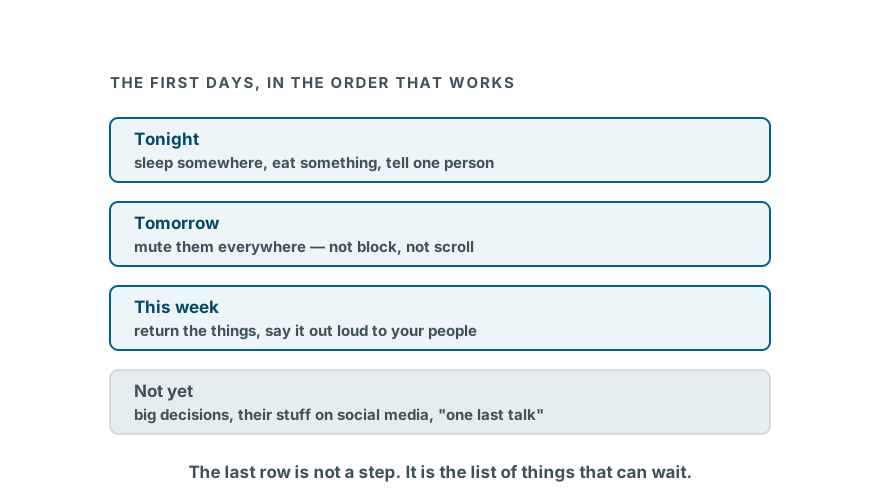
Somewhere to sleep. If you live together, tonight is not the night to solve housing — it is the night to pick a bed, such as a friend’s sofa, the spare room, or a cheap hotel you will not regret in the morning: anywhere the other person is not. The question of who keeps the flat is a next-month question.
Something to eat. Appetite disappears; eat anyway, something small and unremarkable. The first day runs on blood sugar more than insight.
One person who knows. Not an announcement — one call or one message: “we broke up, I’m not okay, can I come over / can you talk”. Saying it out loud once tonight does two things: it makes it real, and it means you are not alone with it at two in the morning.
Mute, not block, not scroll. Muting is putting someone out of sight without announcing anything — stories, feeds, chats — and it is the whole of tonight’s contact policy. Blocking is a decision, and tonight is not for decisions, so it keeps. Scrolling their profile is the single most reliable way to make the evening worse, which is exactly what the mute is there to prevent.
What should I not do on the first day?
A short list, all of it tempting and all of it expensive: the long message, the archive, the audience, the chemical evening, and anything irreversible.
Each item is earned by generations of people who tried it:
- The long message. The one that explains everything, asks the real question, or says goodbye properly. Written tonight, it is dictated by the worst hour of the process, and you will not stand behind it in a week. It keeps until you no longer need to send it.
- The archive. Years of chats, the photo albums, the voice notes. Reading the good parts hurts and settles nothing; tonight it is self-harm with a scrollbar.
- The audience. Cryptic posts, story soundtracks, anything performed. The urge is to be seen hurting; the cost is that it is permanent and public while the situation is neither.
- The chemical evening. Alcohol reliably converts sadness into either messages or worse sadness. If people are drinking with you and watching your phone, different story.
- Anything irreversible. Quitting, moving, deleting, announcing. There is no decision tonight that improves by being made tonight.
Should I reply to my ex the same day?
Nothing needs answering tonight except pure logistics — keys, a lift, who feeds the cat.
A reply written in the first hours is written by the worst possible editor: the version of you with the least information and the most adrenaline. Consider the message you would send at eleven tonight and then reread on a normal weekday morning — the distance between those two readings is the entire argument for waiting. If something genuinely needs saying, it will still be true once the adrenaline has gone, and you will say it better then.
Is it okay to just fall apart for a day?
Yes — the first day is not a test of character, and nobody functions well inside it.
Cancel what can be cancelled. For example, the drinks you had agreed to, the errand that keeps, the call that can move to next week: none of them are worth spending the day’s very small supply of function on. Tell one person the truth rather than the composed version, and treat yourself the way you would treat someone recovering from a physical event — because partly you are. The idea that separation from a person you were bonded to produces a bodily response rather than only a mood comes from the attachment tradition, set out in Bowlby’s Attachment. That book describes what kind of event this is; it says nothing about your particular day, and neither does this page.
If you were the one who ended it
The same list applies, with one addition: the pull to check on them — “are you okay” — is mostly a request to be told you are not a bad person. It reopens the wound to warm your hands on it. If you care about them, the kind version is the clean one: say the necessary things once, then give them the silence in which recovery happens.
Guilt on the first day is not evidence you were wrong. It is evidence it mattered.
The first week, briefly
Tomorrow and the following days get their own pages, but the shape is: mute becomes a routine, the essentials get returned without ceremony, your people get told in plain words, and the contact question gets a policy instead of being renegotiated nightly.
What does not belong to the first week: conclusions. What it meant, whether it was doomed, what you should have done — the analysis machine will offer to run all night, and its first-week output is garbage. The useful thinking happens later, from further away.
Where this page stops
A horrible first day is normal, and so is a horrible first week. What is not a breakup matter: if you feel unsafe, if there was control or fear in the relationship, or if the thoughts tonight have turned toward harming yourself — those need a person, now, not a page. A crisis line, a doctor, someone who can sit with you. Going is not an admission of anything.
Otherwise: get to tomorrow. That is the whole assignment. The first weeks take it from there.